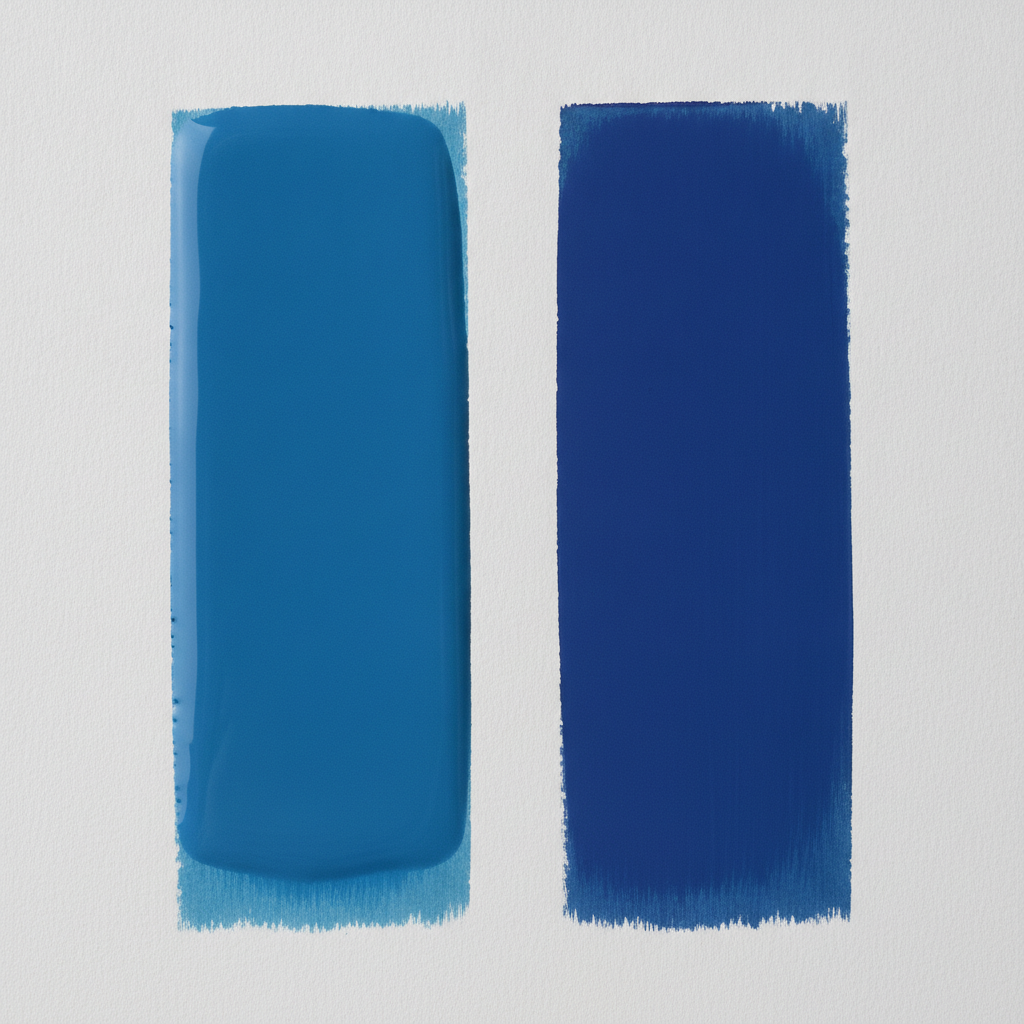
Mix a colour, apply it, come back twenty minutes later and it is noticeably darker. This is normal acrylic behaviour, not a fault in the paint, and once you know why it happens it is easy to work around.
The binder is the culprit
Acrylic paint is pigment suspended in a polymer emulsion. That emulsion is milky white while wet and clear once dry. As the water leaves and the binder clarifies, it stops lightening the colour, so the pigment shows at full strength.
The shift is largest in pale tints and mixtures containing a lot of white, because those have the most binder relative to pigment. Deep colours shift least.
How much to allow
Cheaper paint shifts more, because there is more filler and binder and less pigment. Artist-grade paint with a high pigment load shifts noticeably less, which is one of the practical arguments for it beyond raw intensity.
There is no universal figure to compensate by. The only reliable method is to test the specific paint: put a stroke down, let it dry fully, and compare it against the wet mixture on the palette.
Working with it
Mix slightly lighter than the target if the passage must match something already dry. Keep a dried reference swatch of any colour used across several sessions, since matching wet paint on the palette to dry paint on the board is guesswork.
A wet palette helps enormously for a different reason: it stops the mixture drying before it is used, which otherwise forces constant remixing and makes matching harder still.
The related problem
Acrylic also dries faster than most people expect, particularly in a warm or moving-air room. If edges are going hard before they can be blended, the answer is a retarder medium or a slower working method, not more paint.
Leave a Reply