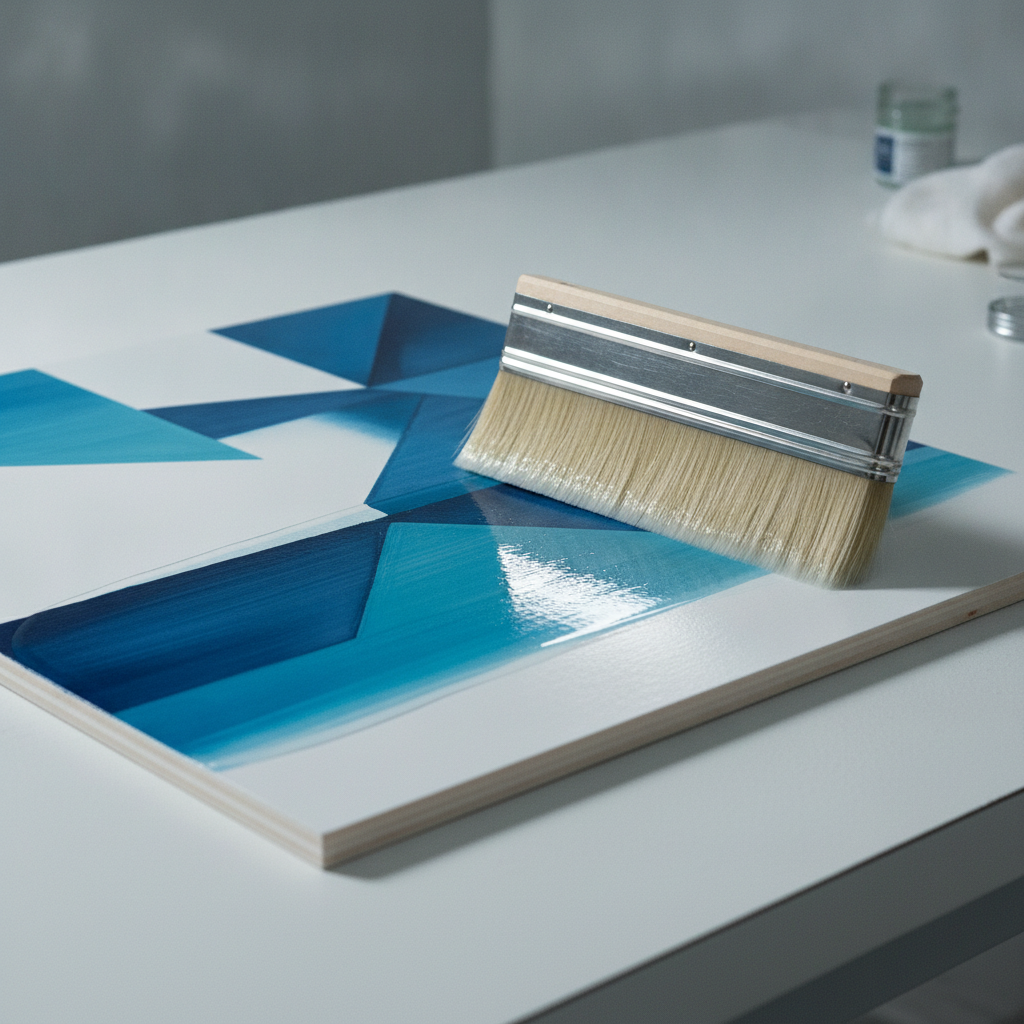
Varnishing protects the surface and evens out the patchy sheen that acrylic leaves. Done carelessly it is also the most reliable way to ruin a finished piece.
Wait longer than you think
Acrylic is touch dry in minutes and fully cured in weeks. Varnishing before the film has cured traps solvent and water underneath, which produces cloudiness that cannot be removed.
Two weeks is a reasonable minimum for a normal thickness. Heavy impasto needs considerably longer.
Isolation coat first
An isolation coat of clear acrylic medium goes between the painting and the varnish. It seals the surface so that if the varnish is ever removed, the removal solvent cannot reach the paint.
Without it, a removable varnish is not really removable, because taking it off takes some of the painting with it.
Applying it
Work flat, in a dust-free room, with the piece well lit from the side so you can see where you have been. Use a wide soft brush and lay the varnish in one direction in overlapping strokes without going back over a section that has started to set.
Two thin coats beat one thick one, with the second at right angles to the first. Thick varnish pools at edges and stays tacky in the middle.
Choosing the finish
Gloss deepens colour and raises contrast. Matte flattens both and can slightly haze dark passages, since the matting agent is a suspended solid. Satin is the usual compromise. Whichever you choose, stir rather than shake, because bubbles dry in place.
Testing
Always test on a scrap prepared the same way, including the isolation coat. Varnish over an untested surface is a decision you cannot reverse.
Leave a Reply