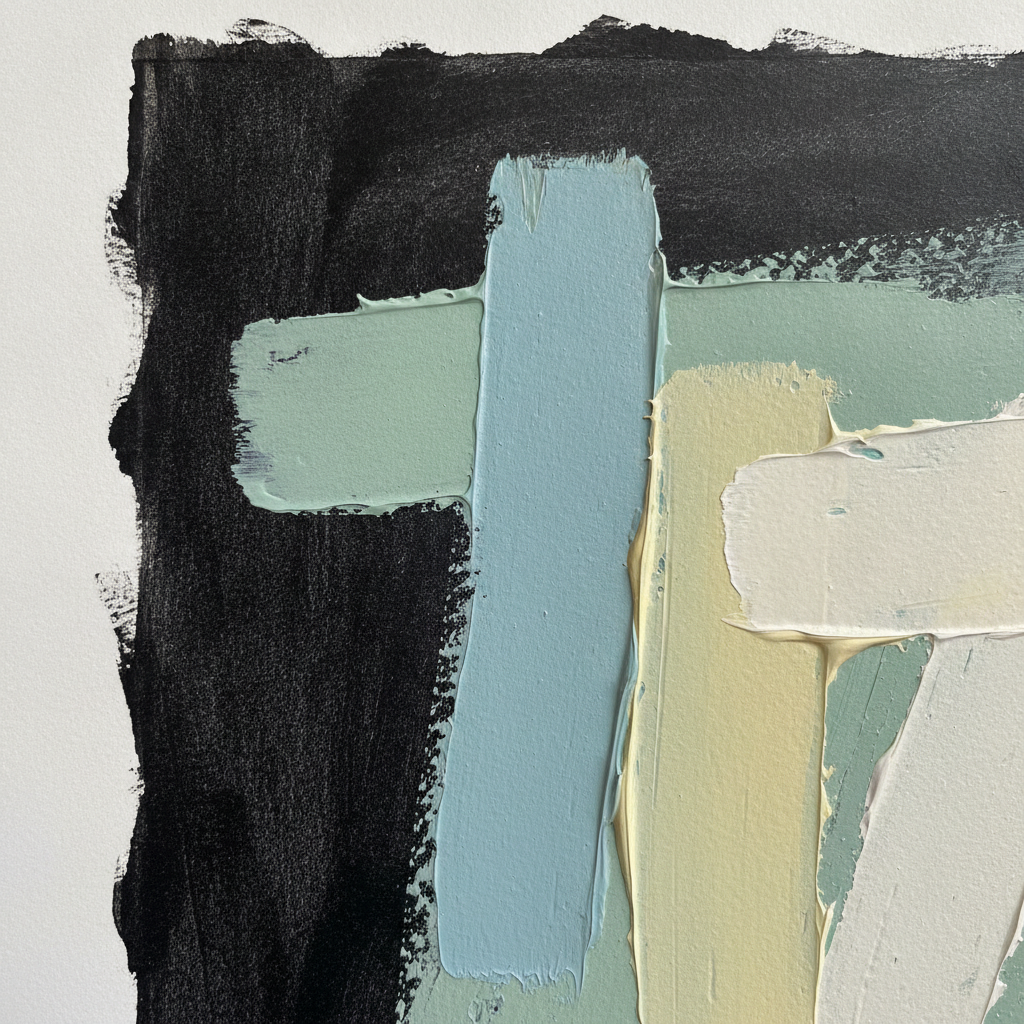
Gouache looks like watercolour in the tube and behaves quite differently on paper. For anyone arriving from watercolour, three differences matter.
It is opaque
Gouache covers what is underneath. Light over dark works, which is the single largest change: highlights can be added at the end instead of being reserved from the start, and mistakes can be painted over rather than lifted.
That freedom removes most of the planning anxiety of watercolour, and removes the luminosity that comes from white paper glowing through a transparent layer. It is a trade, not an upgrade.
It rewets
Dried gouache dissolves again when wet paint touches it. Working in layers means either working fast and leaving the layer below alone, or accepting that the edges will blend into each other.
This is also why gouache is forgiving in the sketchbook. Dried paint on the palette rewets perfectly, so nothing is wasted between sessions.
It dries with a value shift
Gouache dries matte and the value shifts, darks lightening slightly and lights sometimes darkening. Test on scrap before matching an existing passage, exactly as with acrylic.
Practical starting point
Use heavier paper than feels necessary, since gouache goes on wetter than expected. Keep the mixtures thicker than watercolour, roughly the consistency of cream, because thin gouache loses its opacity and simply becomes weak watercolour.
A small palette works particularly well here: gouache mixes cleanly and adding white to everything already unifies the range.
Leave a Reply