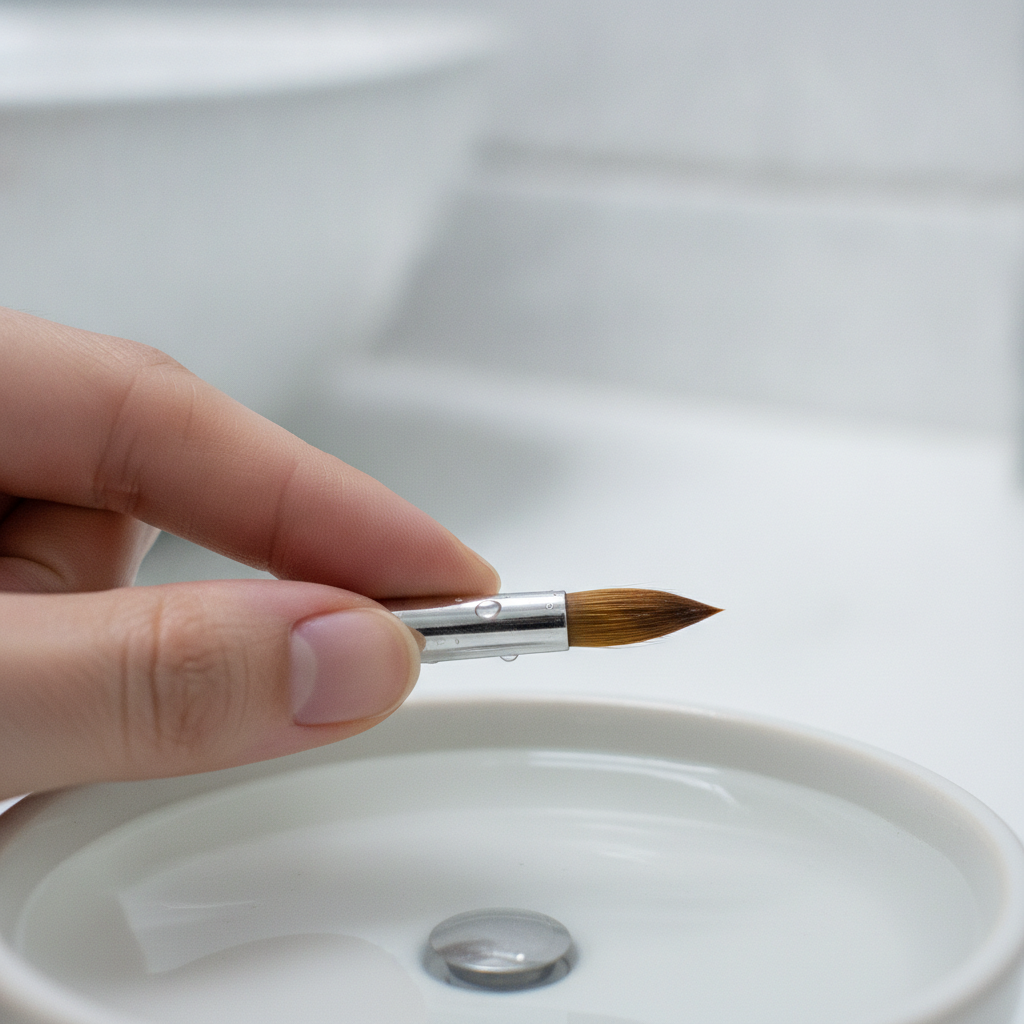
A good natural hair brush should outlast several synthetics. Most die early, and almost always from one of a small number of avoidable habits.
The ferrule is the weak point
Paint that works up into the metal ferrule dries there, spreads the hairs at the base and forces the brush to splay permanently. No amount of cleaning the tip fixes it once it has happened.
So do not load paint past the belly of the brush, and when washing, work from the ferrule outwards rather than jamming the brush into the bottom of a jar.
Water temperature
Lukewarm at most. Hot water softens the adhesive holding the hairs and expands the ferrule slightly, and repeated exposure loosens the whole head. It also strips the natural oils that give sable its spring.
Storage
Flat, or hanging bristles down. Standing a brush upright in a pot lets residual water run into the ferrule, which is the slow version of the problem above.
If brushes are stored in a closed roll, they must be completely dry first. Damp hair in an enclosed space grows mould, and moths are genuinely attracted to natural hair.
Reshaping
Reshape the point with your fingers while damp and let it dry that way. For a brush that has lost its shape, a little gum arabic or brush soap worked in and left to dry will hold the point; wash it out before the next use.
Acrylic is different
Acrylic dries in the brush and is effectively permanent once it has. If you use natural hair with acrylic, keep it wet continuously and clean it immediately. Most people are better off using synthetics for acrylic and saving natural hair for watercolour, which is what it is suited to anyway.
Leave a Reply