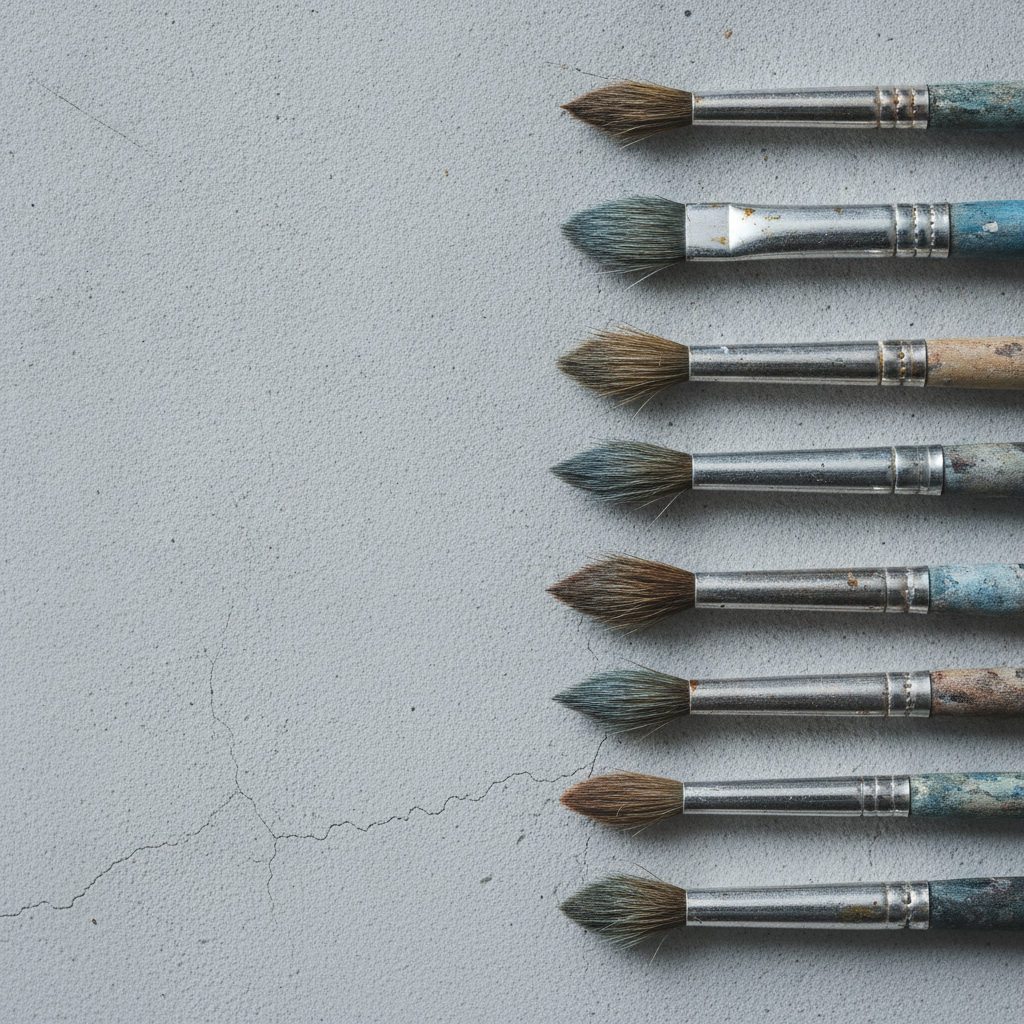
A watercolour brush has one job that matters more than any other: hold a lot of water, then give it back slowly and under control. Almost everything else people look at when buying one is secondary to that.
The point, and why it forms
A good round comes to a point because the individual hairs taper. They are not cut to shape. That is the difference between a brush that keeps its point for years and one that goes fluffy after a month, and it is also most of the price difference.
In a shop, the standard test is to wet the brush and flick it once. It should snap to a point with no stray hairs. Dry brushes in packaging tell you very little, since they are usually stiffened with gum that washes out on first use.
Natural hair against synthetic
Natural hair, particularly sable, holds more water and releases it gradually. That gives long, even washes and a stroke that keeps going. Good synthetics have improved enormously and have more spring, which suits precise marks and drybrush work, but most still dump their water faster.
The practical answer for most people is a mixed set: natural hair for washes and anything that needs a long continuous stroke, synthetic for detail and for anything abrasive.
Size, and the usual mistake
Beginners buy brushes that are too small. A size 10 or 12 round with a decent point will do fine detail perfectly well, because the point is the point regardless of the belly behind it. What a large brush gives you is the water capacity to cross a whole sheet without going back to the palette, which is exactly what small brushes cannot do.
Two or three brushes chosen well will outperform a set of twelve. A large round, a medium round and a flat for wetting and lifting covers most work.
Making them last
Never leave a brush standing in water. The hairs bend permanently and the ferrule loosens as the glue softens. Wash with lukewarm water, reshape the point with your fingers, and dry flat or hanging down.
Soap is only needed occasionally, and hot water never. If a brush has lost its point but the hairs are intact, a wash and reshape while damp will often bring it back.
Leave a Reply