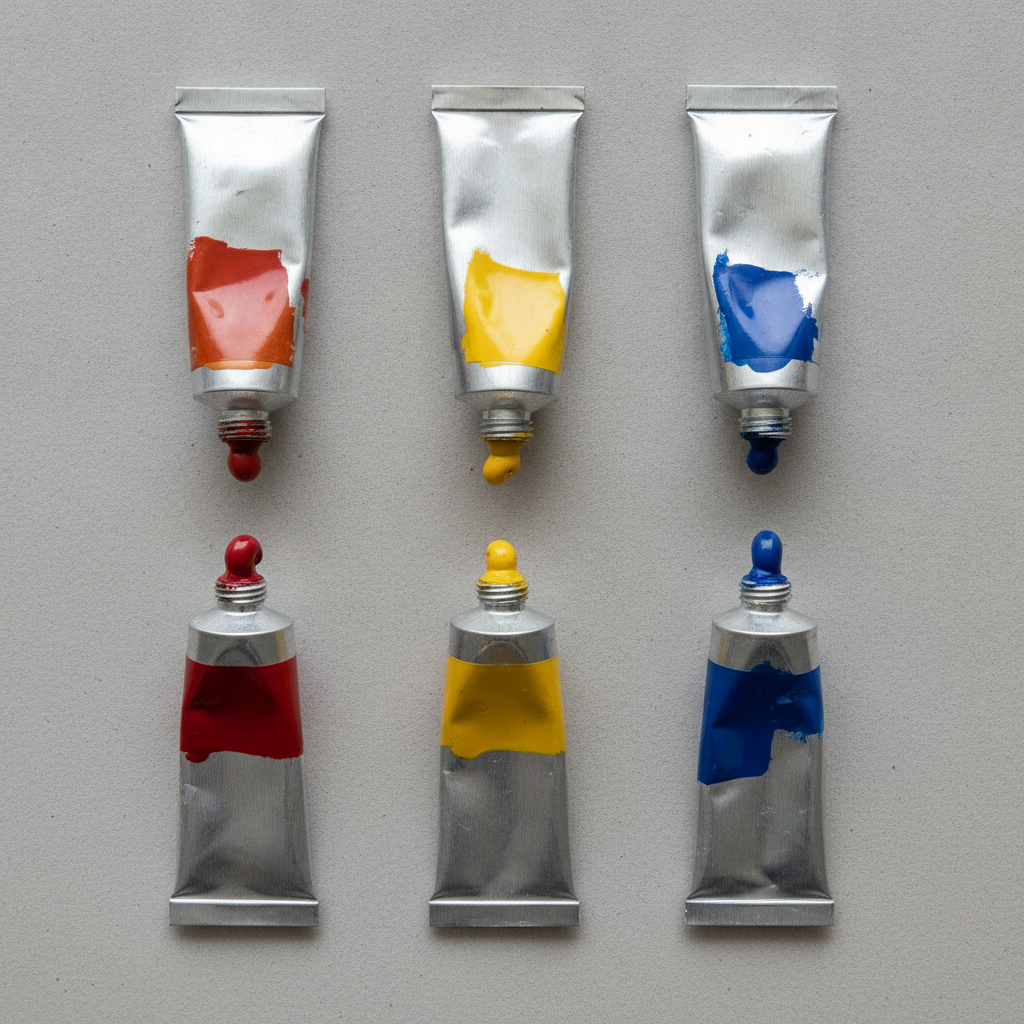
A limited palette is not about self-denial. It is about mixtures that relate to each other, which is what makes a painting look coherent rather than assembled from unrelated parts.
Warm and cool of each primary
The most flexible small palette is six: a warm and a cool version of red, yellow and blue. That gives clean secondaries in both directions, because you can pick the two parents that both lean towards the target.
Mixing a clean violet needs a red and a blue that both lean towards violet. Use a yellow-leaning red instead and the result is muddy, which is the usual reason people conclude they cannot mix purple.
Add earths, not more brights
Once six primaries are in place, the useful additions are earth colours: burnt sienna, yellow ochre, raw umber. They knock colours back believably and mix the greys that hold a painting together.
Adding another bright, a second green or a fourth blue, tends to make things worse. It gives another option without giving another relationship.
Learn it before extending it
Mix a full chart, every colour against every other, and keep it. It is tedious and it removes most of the guesswork permanently. Nothing else shortens the gap between imagining a colour and mixing it.
Where it fails
Some pigments cannot be mixed. A genuinely intense phthalo green, a fluorescent, certain deep violets: no combination of primaries reaches them. If your subject needs one, buy it and treat it as a special case rather than trying to approximate it and accepting something dull.
Leave a Reply