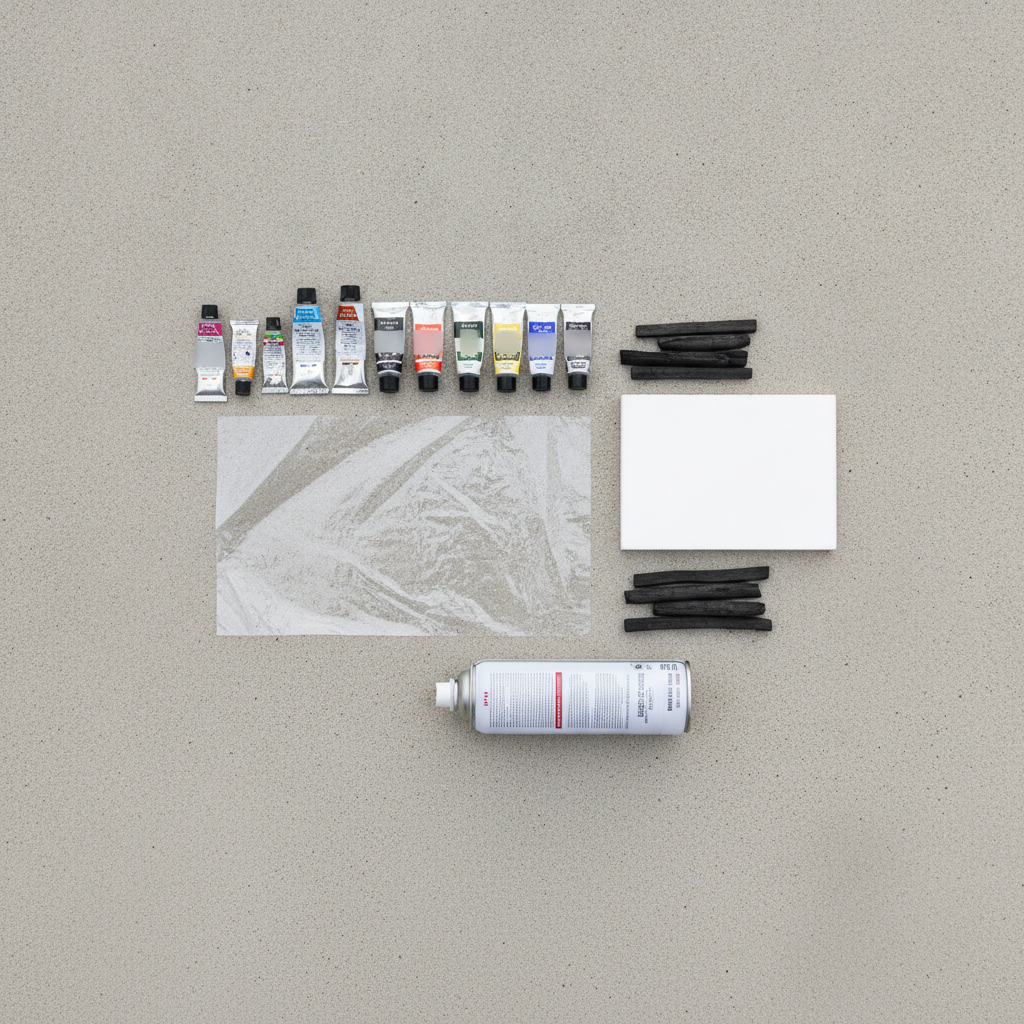
A working reference to the materials covered on this site: what they are for, where they help, and where they are usually oversold. Grouped roughly by how they get used rather than by manufacturer.
Paint
Most of the writing here concerns watercolour, acrylic and gouache, with occasional oil pastel. The recurring theme is pigment load: artist-grade paint generally carries more pigment and less filler, which is why it mixes cleanly and why a cheap tube can look chalky no matter how carefully it is handled.
Brushes
Natural hair holds more water and releases it slowly. Good synthetics snap back better and survive acrylic far longer. Neither is superior in general terms; they suit different jobs, and most working setups end up mixed.
Paper and boards
Weight, sizing and tooth matter more than brand. Heavier paper resists cockling; internal sizing controls how much a wash sinks in; tooth decides how dry media sits on the surface. Boards and rigid panels solve different problems again, mostly to do with warping.
Films and specialty surfaces
Shrink films, drafting films and other plastic-based sheets behave nothing like paper. They take ink and some markers well, reject water-based washes, and need a light touch with fixatives. Worth experimenting with, but expect a period of everything going wrong.
Sprays and finishes
Fixatives, varnishes and effect sprays are the easiest way to ruin finished work. The rule that saves the most pieces: test on an offcut that has been treated exactly like the real thing, and let everything cure far longer than feels necessary.
Studio odds and ends
Foam board, cutting mats, tape, boards for stretching, and the various things that hold work flat while it dries. Unglamorous, but the difference between a clean finish and a buckled one.